Hello all. I wanted to share with y’all some of my research from the past two years. Ever since I got sober I have been working on a book that uncovers hidden knowledge, esoteric/ mystical spirituality and how they relate with recovery. I periodically hand them out at AA meetings to anyone who might be interested. I believe this service to others is what has kept me sober.
Disclaimer: This write-up contains historical biblical facts and opinions that may be upsetting to some people.
Sometimes it’s hard to try and mesh religion with AA; they seem to have opposing ideas. One of the things I have discovered in my research is that the teachings of Jesus mesh perfectly with AA, but teachings from Paul for instance or the old testament seem to be completely opposite.
Another thing is that the biblical texts focus very little on the historical Jesus, compared to what information is available.
Jesus was all about faith, Unity, service, forgiveness, repentance and discipleship (sponsorship); concepts which are drilled into every iota of the twelve steps.
Not only this, but our sources make it clear that Jesus’s version of God meshes perfectly with twelve step philosophy- It is everything and all things therefore cannot be defined as any one entity or idea:
And Jesus said, “the God I speak about is everywhere, he cannot be encompassed with walls, nor hedged about with bounds of any kind”. -The Aquarian Gospel of Jesus the Christ 28:12
Our sources:
Source: Edgar Cayce
Our first source on Jesus and the group called the Essenes is from a gentleman named Edgar Cayce. Cayce was a nationally revered psychic medium from the early twentieth century. He was a devout Christian and Sunday school teacher who, as a young man, underwent a hypnotic regression which gave him the ability to contact the Akashic records.
The Akashic records are talked about in the Bible and are referred to as“God’s Book of Remembrance" or “The Book of Life”.
Author Levi H. Dowling explains the Akashic records in 1908:
“The finer ethers, called by Oriental scholars, Akasha, are sensitized
films on which every sound, color, word, even every thought, is registered. The truth of this statement is not now questioned by any great
number of critical scholars, although it may not come within the scope
of scientific proof. “
Over the course of his psychic “career”, Edgar Cayce gave over 14,000 psychic readings. At first, he would give medical diagnoses to people, sometimes across the country, by only having their name and address.
He would go into trance and search the records and find the cure to their ailments. He was found to be over 95% accurate when followed up by medical personnel. He became so famous and helped so many people that he met an early demise, giving too many readings and deteriorating his health in an extreme manner.
Although his early readings were health related, he soon realized that his “patients” were not only alive, in this current life, but that they all had many, many past lives. So he began doing past life readings to help his patients work out traumas and gain insight and highlight possible karmic lessons.
Several of the persons whom he helped had past lives around the time of Jesus, and many belonged to the Essene group. There were also many readings where the unconscious Cayce was specifically asked about the life of Jesus. Many of our readings were found in the book “Edgar Cayce’s Story of Jesus” which was compiled by Jeffrey Furst.
Bill Wilson, co-founder of Alcoholics Anonymous, was actually a big fan of Cayce. Wilson’s inspiration came largely through esoteric/ mystical sources like Emanuel Swedenborg, William James, The Oxford Group and Cayce. I found an actual letter from AA’s Bill Wilson to Edgar Cayce’s son Hugh Cayce, written in 1951, where he expresses his admiration for the work of Cayce:

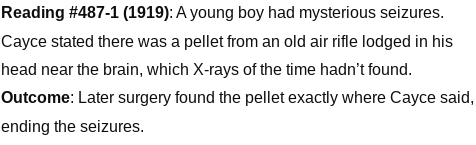
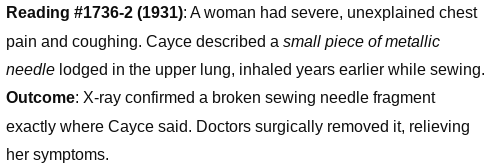
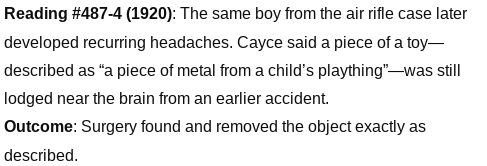
Here are just a few of Cayce’s over 14,000 recorded readings that showcase the accuracy of his information:
Source: The Aquarian Gospel of Jesus the Christ
Our second source is The Aquarian Gospel of Jesus the Christ, which was written by Levi H. Dowling. This book, which records Jesus’s life from birth to resurrection contains all of the lost years missing from the Bible; ages 13-29 in which many sources say Jesus travelled to the far East and other places. The timeline in this book matches so closely to Cayce’s record of Jesus’s lost years that it becomes almost impossible to believe either inaccurate.
Dowling was born in the mid 1800’s and was a Protestant Christian pastor at the early age of eighteen. During the Civil War, he was a chaplain for the Union army; bringing the good news of Christ to battle worn soldiers.
After the war, Dowling dedicated the next forty years to mastering the arts of spirituality and meditation. Along the way, he learned how to access the Akashic records; the same database of information Edgar Cayce used during his psychic readings.
In the early morning hours of each day, Dowling would meditate and access the records and transcribe details from the life of Jesus; eventually compiling his findings in The Aquarian Gospel of Jesus the Christ, which he published in 1908, just three years before his death.
The Aquarian Gospel is prefaced as follows:
“The life of Jesus, the Nazarene, is the most precious heritage of the
children of men. Jesus lived in an age not very far advanced in spiritual
consciousness, and not many of his works and words were comprehended
by the people, yet not one of his lessons has been lost. We have imper-
ishable records of every work, word and thought, and now, at the begin-
ning of the Aquarian Age, the age of spirit and of the Son of Man, they
are revealed, and in this book, The Aquarian Gospel of Jesus the Christ,
they are, for the first time, published to the world.
The source from which the information contained in this book has
been derived will, doubtless, be the subject of many honest inquiries,
and it is thought best to give some explanatory statements regarding
this matter.
The finer ethers, called by Oriental scholars, Akasha, are sensitized
films on which every sound, color, word, even every thought, is regis-
tered. The truth of this statement is not now questioned by any great
number of critical scholars, although it may not come within the scope
of scientific proof. In regard to this matter the student must deal with
the same kind of testimonies that has ever been relied upon to prove
the existence of God and a future life.
There are three postulates of which the natural man knows nothing,
and these are: (1) God is; (2) Man fives after death; (3) Every word,
thought and intent of man is recorded in the Book of Remembrance.
These are spiritual postulates, and cannot be established by the
testimonies of the senses. They are things of the Spirit of God, and
Paul, the Christian apostle, said:
"The natural man receiveth not the things of the Spirit of God, for
they are foolishness unto him; neither can he know them, because they
are spiritually discerned." (1 Cor. 2:14.)
But we are speaking unto men who have risen above prejudice and
know that they "have a more sure word of prophecy, whereunto they do
well that they take, heed, as unto a light that shineth in a dark place,
until the day dawn and the Day Star arise in their hearts." (2 Peter 1:19.)
Many sacred writers have referred to these universal record ethers,
and some have called them “books.” Malachi said:
"They that feared the Lord spoke often one to another; and the
Lord harkened and heard it, and a Book of Remembrance was written
before him for them that feared the Lord and thought upon his name."
(Mai. 3:16.)
John certainly referred to these records when ne said:
"And I saw the dead, small and great, stand before God; and the
books were opened; and another book was opened, which is the Book of
Life; and the dead were judged out of the things which were written in
the books according to their works." (Rev. 20:12.)
In this great Book of Remembrance were recorded all the lessons
that Jesus taught, as well as a well-worded history of his career.
While words and thoughts impress themselves upon these etheric
films, or pages of the Book of Remembrance, it is necessary for an agent
to make a record of events. This agent has been called the Recording
Messenger, frequently referred to by sacred writers.
With every soul born into this world our heavenly Father sends a
messenger as life-companion, who is commissioned to light up the way
and record every event. These messengers were in the mind of the
great teacher when he said:
"Take heed that you despise none of these little ones; for I say unto
you, that in heaven their messengers do always behold the face of my
Father in heaven." (Matt. 18:10.)
The messenger of Jesus must be credited with the remarkable clear-
ness with which these holy records have been made in the Book of
Remembrance.
During the years that have passed since the records were made,
many people have been permitted to make extracts from them and pub-
lish them for the benefit of man. The book of the New Testament,
known as the Gospel according to John, was copied almost wholly from
these records, and many sublime passages in the works of the Christian
fathers were obtained from the same source.
The evangelists, Matthew, Mark and Luke, collected from current
history some lessons and incidents of the life of Jesus and published
them; but all they gave is fragmentary. A few incidents of his infantile
days and one event at the age of twelve are given, and that is all that
men know of him so far as these writings are concerned, until he was
thirty years of age. We then have given a few of his marvelous lessons,
a record of a limited number of his mighty works, and a brief history
of his resurrection and ascension, and then the student is left to draw
upon his imagination to supply historic deficiencies.
For centuries the consecrated believer has thought it strange that
the divine Father who directs all the affairs of the world should ordain
that only such incomplete accounts of these matchless teachings should
have been given to men, and has prayed for greater light.
Men have not seemed to realize that the work of God is not for a
day, but for all ages. At the time of the fragmentary writings of Mat-
thew, Mark, Luke and John the world was ready for no more than was
given.
Even after more than three years of intimate companionship with
the Master the disciples were not ready to receive all the truth. Just
before his crucifixion Jesus said to them:
"I have yet many things to say unto you, but you cannot bear
them now. Howbeit when she, the Spirit of truth, is come, she will
guide you into all truth; for she will not speak for herself, but what
things soever she shall hear, these shall she speak." (John 16:12, 13.)
(In the Book of Remembrance the Holy Spirit, known as the Holy
Breath, is referred to as feminine, really, the divine Mother.)
The world has at last risen to the plane of spiritual consciousness
where men can grasp the higher meanings of the life and lessons of Jesus,
and the Spirit of truth has torn away the veil, and a son of man, after
more than forty years of preparation, has been permitted to enter the
great galleries where all life histories are recorded and make a copy of
these records. This copy, and the translations thereof, constitute THE
AQUARIAN GOSPEL OF JESUS THE CHRIST
To the world it matters not who Levi, the translator of these holy
records, may be; his work stands unimpeachable. The character of
the translated texts and lessons bears the stamp of Jesus, the Christ;
for no man, except the world’s greatest master, could have touched the
chords of divine wisdom which these messages breathe forth.
With hearts overflowing with gratitude to the Supreme Giver of
life and all its blessings, we place this Gospel within the reach of all men,
fully believing that with it in hand and heart the great body of believers
will be able to “keep the unity of the spirit in the bonds of peace.”
Source: Dolores Cannon
Dolores Cannon (1931–2014) was an American hypnotherapist, author, and lecturer best known for developing a style of hypnosis she called Quantum Healing Hypnosis Technique (QHHT). Beginning in the 1960s, she conducted thousands of hypnosis sessions in which clients described what they experienced as past lives, spirit communication, and historical events.
In Jesus and the Essenes, Cannon’s primary source is a hypnosis subject who, while in trance, identified himself as “Suddi,” an Essene living at Qumran during the lifetime of Jesus. Through these sessions, she reconstructs:
-
Daily life within the Essene community,
-
The education and spiritual training of Jesus and John the Baptist,
-
Essene interpretations of Old Testament figures
-
Events surrounding the Dead Sea Scrolls and early Christianity.
Readers who are familiar with Edgar Cayce often notice parallels between Cannon’s work and Cayce’s readings. Both describe:
-Reincarnation as a framework for understanding spiritual development,
-The Essenes as playing a significant role in preparing for Jesus’ ministry,
-Hidden or esoteric traditions preserved outside the biblical canon
-History being accessible through altered states of consciousness.
Source: Nicholas Notovitch’s “The Unknown Life of Jesus:
Nicolas Notovitch (1858–after 1916) was a Russian journalist, traveler, and author best known for his book The Unknown Life of Jesus Christ (1894). In the book, Notovitch recorded that while recovering from an injury at Hemis Monastery in Ladakh, India, Buddhist monks showed him ancient Tibetan manuscripts describing the “lost years” of Jesus.
According to these manuscripts, Jesus—referred to as “Issa”—traveled to India and Tibet between the ages of thirteen and twenty-nine, where he studied Hindu and Buddhist teachings before returning to Judea.
The Hemis monastery was also specified as a destination for Jesus in The Aquarian Gospel. Notovitch’s book was highly controversial, and its authenticity was viciously attacked by church authorities. Even today, AI programs like ChatGPT and Google will flat out lie and tell you that Notovitch flat out lied about seeing the manuscripts.
What they won’t tell you, unless you directly call them out on it, is that since Notovitch, at least four other reputable persons have witnessed these same manuscripts at the Hemis monastery and verified Notovitch’s account: Clarence Gask, Nicholas Roerich, Swami Trigunatitananda and Swami Abhedananda. About Abhedananda:
“Subsequently, Abhedananda had the English translation of Notovitch’s text printed in India where the “Christian” authorities had until then prohibited both its publication or its importation and sale.
Immediately after the publication of the English edition of Notovitch’s book, the British Government in India hired Moslems to go throughout Ladakh and neighboring areas posing as Hindus in search of further manuscripts about Jesus in India.
They were to buy the manuscripts and bring them to their employers to be destroyed. Whether this shameful ruse succeeded to any degree we have no knowledge.” -OCOY.org/original-christianity/the-christ-of-india/
After Notovitch left India, he took the scrolls to Rome to inform the Vatican of his findings. To his surprise, the cardinal to whom he spoke told Notovitch that the Vatican was well aware of Jesus’s time in India and that the Vatican Library had 63 books which told the story of Jesus’s travels!
The cardinal offered to buy the manuscripts from Notovitch but Notovitch refused.
Swami Trigunatitananda of India not only saw the manuscript at the Hemis monastery, he also was shown two paintings of Jesus while he was there. One was a depiction of his conversation with the Samaritan Woman at the well.
You may ask how did someone from India get a painting of Jesus and the Samaritan woman if this event took place in Galilee 2,000 years ago? This is where it gets interesting.
In the Aquarian Gospel, chapter 81 the book indicates that a priest from temple Jagannath named Laamas had recently travelled from India to travel with Jesus and his disciples, and it was shortly after Laamas arrived that they met the woman by the well.
Perhaps the picture was drawn by Laamas or given to him to take back to India; I really don’t know but what are the odds that the Gospel mentions that an Indian priest happened to visit Jesus during this time, and that a painting of this event would wind up at a monastery in India?
The other picture seen by the Swami at the Hemis Monastery was of Jesus meditating in the Himalayan forest surrounded by wild beasts that were tamed by his very presence. In America the Swami described the painting to an artist who produced the following painting:

The BBC, along with author and traveller Edward T. Martin, produced a documentary about Jesus in India in 2008, which you can watch on Youtube. During the filming of the documentary, he (Martin) travelled to the Jagannath Temple in Puri, India, which is the temple that Jesus was reported to have studied in during his teenage years in both The Aquarian Gospel and the Notovitch manuscripts.
In the documentary, Martin interviews his holiness the Shankaracharya of Puri, who is one of the four ecclesiastical heads of the Hindu religion. He would be equal to the pope in Catholicism.
The Shankarachara goes on to explain that the (older, now nonexistent) Jagannath Temple was established in 483 B.C. and that indeed Jesus had studied there for several years. We don’t see why such a man would have any reason to make up this story.
Specifically, according to his holiness, Jesus studied the Achar Samhita, or the Code of Conduct; a very specific text. I found this to be extremely helpful information, and I am going to tell you why.
The Aquarian Gospel specifically names the Code of Conduct as the material Jesus was studying while in temple Jagannath, and since the interview with the Shankarachara in 2008 was the only other source where this text was mentioned, it couldn’t have come from the Notovitch book or anywhere else.